


An extra document added to your purchase agreement after it’s been signed. It captures new terms or changes that both you and Anthem have agreed to — things that weren’t part of the original agreement.

July 27, 2026
New Home Buyer Glossary: Alberta New Home Building Terms Explained in Plain Language
This glossary defines 50+ terms every Alberta new home buyer will encounter, from your first mortgage conversation through to post-possession warranty claims. Every definition is written in plain language, specific to how these terms are used in Alberta’s new home market.
Buying a new home comes with its own language.
Lenders talk about stress tests and TDS ratios. Builders talk about possession dates and design centres. Lawyers talk about title insurance and statements of adjustments.
Nobody stops to explain what any of it means.
Anthem does.
Start with these.
If you’re getting started, focus on the Money + Mortgages category first: stress test, CMHC, down payment, FHSA, and RRSP Home Buyers’ Plan. Once you’re pre-approved and visiting show homes, the Agreement and Your Lot + Home Type terms become relevant.
Think of this as a reference, not a prerequisite. You don’t need to know all of it before you begin.
50 terms. Plain language. No filler.
Browse alphabetically using the letter filter or scroll through the full list. Each definition tells you what the term means, which category it belongs to, and when in the buying journey it’s most likely to come up.
Category

The date from which you take over responsibility for property taxes and utilities on your new home. Usually your possession date — from this point on, these costs are yours.
A document that forms part of your purchase agreement and, where there’s any conflict, its terms take priority. Common amendments include the Garage Amendment, Deposit Change Amendment, Add Name Amendment, and Condition Date Amendment.
The full length of time to pay off your mortgage — typically 25 years in Canada for insured mortgages. A longer amortization means lower monthly payments. It also means more interest paid over time.
An independent assessment of your home’s market value, usually required by your lender before they’ll approve your mortgage. It confirms the home is worth what you’re paying for it.
Rules set by the community or municipality that govern how homes in the area can look — things like exterior materials, colours, fence styles, and landscaping standards. Your Anthem home is designed to meet these from the start.
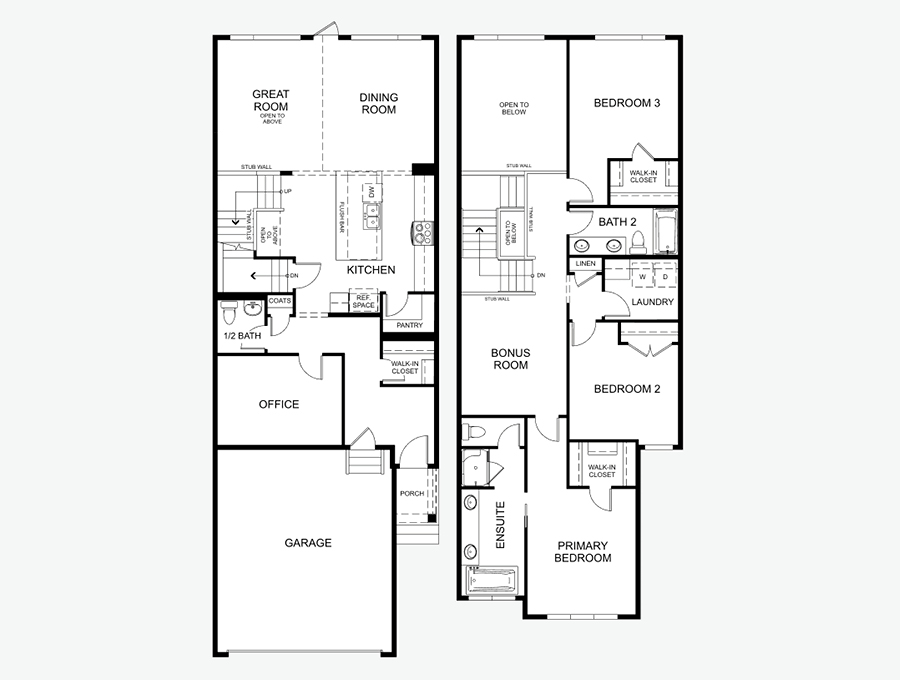
The official set of house plans used for construction. These are the baseline drawings before any revisions are marked up.
A short-term loan that covers the gap between buying your new home and receiving the proceeds from selling your current one. Common for move-up buyers when possession dates don’t line up perfectly.
The specific, permitted area on your lot where Anthem is legally allowed to build your home. It’s calculated by taking your total lot width and subtracting the mandatory setbacks — the required distances between the house and each property line. Think of it as the footprint your home must fit within.
The additional costs that come due when you take possession of your home — on top of your down payment. In Alberta, these typically include legal fees, title insurance, and property tax adjustments. Budget 1.5% to 4% of your purchase price.
The final steps involved in making your new home officially yours — signing legal documents, transferring funds, registering the title, and handing over ownership. Your real estate lawyer handles most of this on possession day.
Comparative Market Analysis. An assessment of your home’s value based on recent sales of similar homes in the area. Used by real estate professionals to help buyers and sellers understand what a property is worth in the current market.
Canada Mortgage and Housing Corporation — the federal body that provides mortgage default insurance when your down payment is under 20%. The insurance premium (between 2.8% and 4% of your mortgage) is added to your mortgage balance, not paid upfront.
A mortgage that funds on the day you take possession of your new home — once construction is complete. Unlike a draw mortgage, the full amount is advanced at closing rather than in stages during the build.
When one party fails to meet their obligations under the purchase agreement — like missing a deposit deadline or not completing the purchase. Depending on the circumstances, this can result in penalties or the agreement being terminated.
A written record of items in your new home that are incomplete or need to be fixed — identified during your possession walkthrough. Get it signed by Anthem before you take possession. Verbal agreements don’t count.
An upfront payment made when you sign your purchase agreement, showing your commitment to the purchase. It’s applied toward your final purchase price at closing.
Where you go to make your home yours. After signing your purchase agreement, you’ll meet with an Anthem interior design team member to choose your finishes, fixtures, and upgrades — the selections that make your home feel like it was built for you.
A document prepared by Anthem that gives you important information about your home and the community — things you need to know before you commit to the purchase.
A registered federal savings account built specifically for first-time buyers. You can contribute up to $8,000 per year, up to a lifetime maximum of $40,000. Contributions are tax-deductible. Withdrawals used toward a qualifying home purchase are tax-free.
Your last design centre appointment before your home goes into production. This is where your selections are confirmed and locked in.
The Financial Transactions and Reports Analysis Centre of Canada — the federal agency responsible for anti-money laundering and anti-terrorism financing regulations. As part of your home purchase, Anthem is required to verify your identity and collect certain information to comply with FINTRAC requirements.
A purchase agreement where all conditions have been removed and the sale is unconditional. Once a sale is firm, both you and Anthem are legally committed to completing the transaction.
A mortgage where your interest rate stays the same for the entire term — giving you predictable monthly payments. Common terms are one, two, three, or five years. At the end of the term, you renew at the rate available at that time.
Full ownership of both your home and the land it sits on — with no shared ownership obligations to other homeowners. Most new single-family detached homes in Alberta, including Anthem’s, are freehold.
A home where the garage faces the street and is accessed from the front driveway. The garage is attached to the home with a direct interior entrance making it extra convenient in an Alberta winter.
The percentage of your gross monthly income that goes toward housing costs — your mortgage payment, property tax, and heat. Lenders typically cap this at 32%. It’s one of two ratios used to determine how much mortgage you can qualify for.
A 5% federal tax that applies to new home purchases in Alberta. It’s separate from the purchase price, not included in it. A partial rebate may apply if the home is your primary residence. First-time buyers who signed after March 20, 2025 may qualify for a full rebate on homes under $1,000,000.
A federal non-refundable tax credit worth up to $1,500 for first-time buyers. You claim it on line 31270 of your tax return in the year you purchase your home. It can be split between spouses or common-law partners.
An organization in some communities that manages shared amenities and common areas, and enforces community rules. If your community has one, there will be monthly fees. Always ask what they cover and how much they are before you buy.
A federal program that lets first-time buyers withdraw up to $35,000 from their RRSP tax-free toward a home purchase. The amount needs to be repaid to your RRSP over 15 years otherwise it’s added to your taxable income.
A walkthrough of your completed home, scheduled near possession, where Anthem walks you through how everything works. This includes your home systems, finishes and maintenance requirements.
Your dedicated Anthem contact from the time conditions are removed on your purchase right through to after you’ve moved in. One person who knows your file, answers your questions, schedules your walkthroughs, and is there with you on possession day.
The first payment you make when signing your purchase agreement. It confirms your commitment to the purchase and is fully refundable if you choose not to proceed or are unable to obtain financing.
The official legal document that confirms you own your home, registered with Alberta Land Titles. Your real estate lawyer handles the title transfer on possession day.
A provincial tax paid when property ownership changes hands. Alberta does not have a provincial land transfer tax, one of the real financial advantages of buying here compared to BC or Ontario.
A deposit collected at or near possession to ensure the exterior landscaping of your property is completed within a required timeframe. It’s returned to you once the landscaping requirements have been met.
A home where the garage sits at the back of the lot and is accessed from the lane rather than the street. Your front entrance faces the street, no garage door dominating the façade. Typically more affordable than a front drive home.
Your real estate lawyer or notary — the person who handles the legal side of your purchase. They review your documents, manage the title transfer, and make sure everything is accurate and in order before you take possession.
A legal claim registered against a property — often by a contractor who wasn’t paid during construction. Title insurance protects you against unknown liens on your title.
A reservation placed on a specific lot to take it off the market while you complete your financing or make your purchase decision. Conditions and timelines vary. Ask your sales representative for details.
A licensed professional who shops the market on your behalf to find the best mortgage for your situation. They’re not tied to any one bank — which means access to a wider range of products and rates than you’d find going directly to a single lender.
A lender’s confirmation of how much you can borrow, based on a review of your income, credit, and debts. It’s not a guarantee, but it tells you where you stand and most builders require one before you sign a purchase agreement.
The length of your current mortgage contract, typically one to five years. At the end of the term, you renew at whatever rate is available then. Don’t confuse it with amortization, which is the full length of time to pay off your mortgage.
The formal contract between you and Anthem that sets out the purchase price, conditions, and timeline. Once signed by both parties, it’s legally binding.
A lot that’s narrower at the street and widens toward the back, like a slice of pie. Often found on the inside of a curved street. Usually offers a larger backyard than a standard lot.
A scaled diagram showing the layout of your lot including the location of your home, setbacks, garage, and any other structures. It’s used during the permit and construction process to confirm everything is positioned correctly on the land.
The day you take legal ownership of your new home. When your mortgage funds, the title transfers to your name, and you pick up your keys. Your Homeowner Liaison will be there with you.
A walkthrough of your home before the drywall goes up so you can see what’s inside the walls. How your plumbing runs, where your electrical is, how it all works. It’s also a chance to ask any questions before everything gets covered up.
A home that is purchased before construction begins. You choose your lot and floor plan, make your selections, and wait for your home to be built. Possession is typically 6 to 12 months from signing, but can be subject to change.
An early-stage floor plan and lot layout used to define your vision, lock in a preliminary quote, and prepare for the municipal Development Permit. It bridges the gap between choosing your home and finalising the blueprints.
Your first design centre appointment. An early look at your options for finishes, fixtures, and upgrades. It helps you start making decisions and gives you a sense of what’s available before your final selections are confirmed.
A new Anthem home that’s already under construction or move-in ready. You get a brand-new home with all the quality and warranty that comes with it on a shorter timeline than a pre-sale build.
The legal right to cancel your purchase agreement within a specified period, as set out in your contract or under provincial legislation. The timeframe and conditions vary. Your real estate lawyer will confirm what applies to your situation.
A legal restriction registered on your land title that limits what you can do with the property. For example: fence heights, exterior structures, or certain uses of the land. Your lawyer will identify any covenants during the title search.
A fully furnished and upgraded model home that shows you what an Anthem home can look like. It’s built to inspire. Keep in mind that what you see is often an upgraded version. Ask to see the base specifications alongside the show home.
A plan of the community that shows how the land is laid out: roads, parks, schools, commercial areas, lot locations, and density. It also shows street furniture locations like fire hydrants and power boxes. For exact lot details, reference the building pocket plan.
The day the future location of your home is physically marked out on the lot so construction can begin. It’s the moment your home goes from a plan on paper to a real spot on real ground.
A legal document that shows the final financial settlement between you and Anthem at closing including your deposit, property taxes, and any utility adjustments. Anthem provides a draft SOA, which does not include the final property tax figure. The final SOA comes from your lawyer.
A federal mortgage rule requiring lenders to qualify you at the higher of your contract rate plus 2%, or 5.25% — whichever is greater. It’s designed to make sure you can still afford your payments if rates go up. In practice, it reduces the maximum mortgage you can qualify for.
The point at which you confirm or waive all conditions in your purchase agreement. Once conditions are removed, the sale is firm.
The percentage of your gross monthly income that goes toward all debt payments. This can include housing costs plus car loans, student loans, and credit card minimums. Lenders typically cap this at 44%. If you carry other debts, this is often the number that limits how much mortgage you can qualify for.
The formal end of a purchase agreement, either by mutual agreement or because one party has breached its terms. Depending on the circumstances, there may be financial or legal consequences.
The legal document that proves you own your property. When you take possession of your Anthem home, your lawyer registers the title in your name with Alberta Land Titles.
Insurance that protects you against problems with your land title that weren’t caught during the title search. Things like fraud, survey errors, encroachments, or unknown liens. Usually required by lenders. The one-time premium is typically $200 to $400, paid at closing.
A standard rectangular lot. The most common lot shape in new communities. Consistent width front to back, with clearly defined property lines on each side.
A mortgage where your interest rate moves with your lender’s prime rate, which means your payments can go up or down over time. Variable rates often start lower than fixed rates but carry more uncertainty if rates rise during your term.
A home built right up to one side property line with no side yard on that side. It allows for wider interior spaces on a narrower lot. Common in higher-density communities where land is used more efficiently.
The rules set by your municipality that determine how land can be used: residential, commercial, mixed-use, and at what density. Understanding the zoning of land near your community tells you what could be built there in the future.
No terms found.
Still have questions?
Still have questions?
That’s normal; new build terminology isn’t exactly bedtime reading. Our sales team can walk you through anything on this list (and the stuff that didn’t make the cut). Reach out today and we’ll translate the jargon into an actual answer.
Related News

Can I Afford to Buy a New Home in Alberta?

The new first-time home buyer GST rebate — what Alberta buyers need to know

Your Dedicated Homeowner Liaison

Register
Get Updates on New Homes in Alberta
Get Updates on New Homes in Alberta
Be the first to hear about new community launches, show home openings, and available homes in Calgary, Edmonton, and Grande Prairie
Register for Updates